High Craft Wines in Trentino and Veneto
Every two years, Venice hosts La Biennale di Venezia, an incredible city-wide art exhibition that has been running since 1895. Some call it the "Olympic Games of the art world" because nations get to be represented by their selected artists. Can it get any better than visiting the city of Venice, while also enjoying the carefully curated work of world-renowned artists within its beautiful walls?
All it takes is a small detour to the nearby wine regions of Trentino, Alto Adige and Veneto. As a new sommelier at Piccino Dogpatch, I obliged — and I am delighted to highlight two legendary wineries whose wines have long been part of Piccino’s Wine Program and that I had the opportunity to visit.
Elisabetta Foradori and Trentino
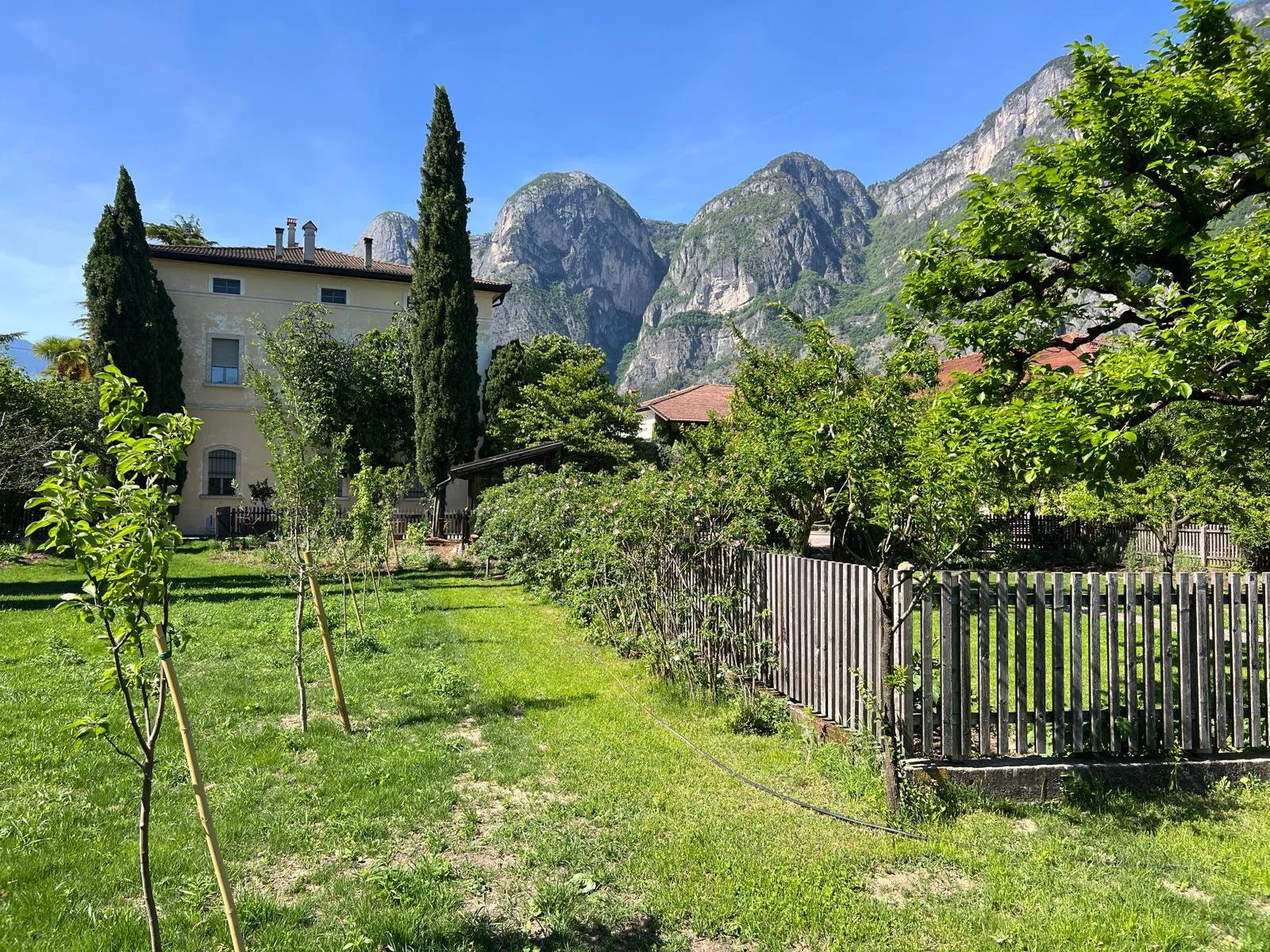
My first visit was to the much loved and revered Foradori winery in Trentino. For those who’ve never heard of the northern Italian region of Trentino, it’s truly an amazing scene. Nestled along the Adige River beneath the dramatic peaks of the Dolomites, Trentino benefits from a unique alpine terroir shaped by altitude, mountain protection, and constant valley breezes. The unique terroir of Trentino makes it a perfect home for the many indigenous grape varietals.
Elisabetta Foradori is very well respected worldwide for the quality of her wines and her influence in biodynamic viticulture and natural winemaking. She is an inspiration to many, and Piccino has been privileged to have a relationship with her and to have organized wonderful wine dinners with her at our restaurant.
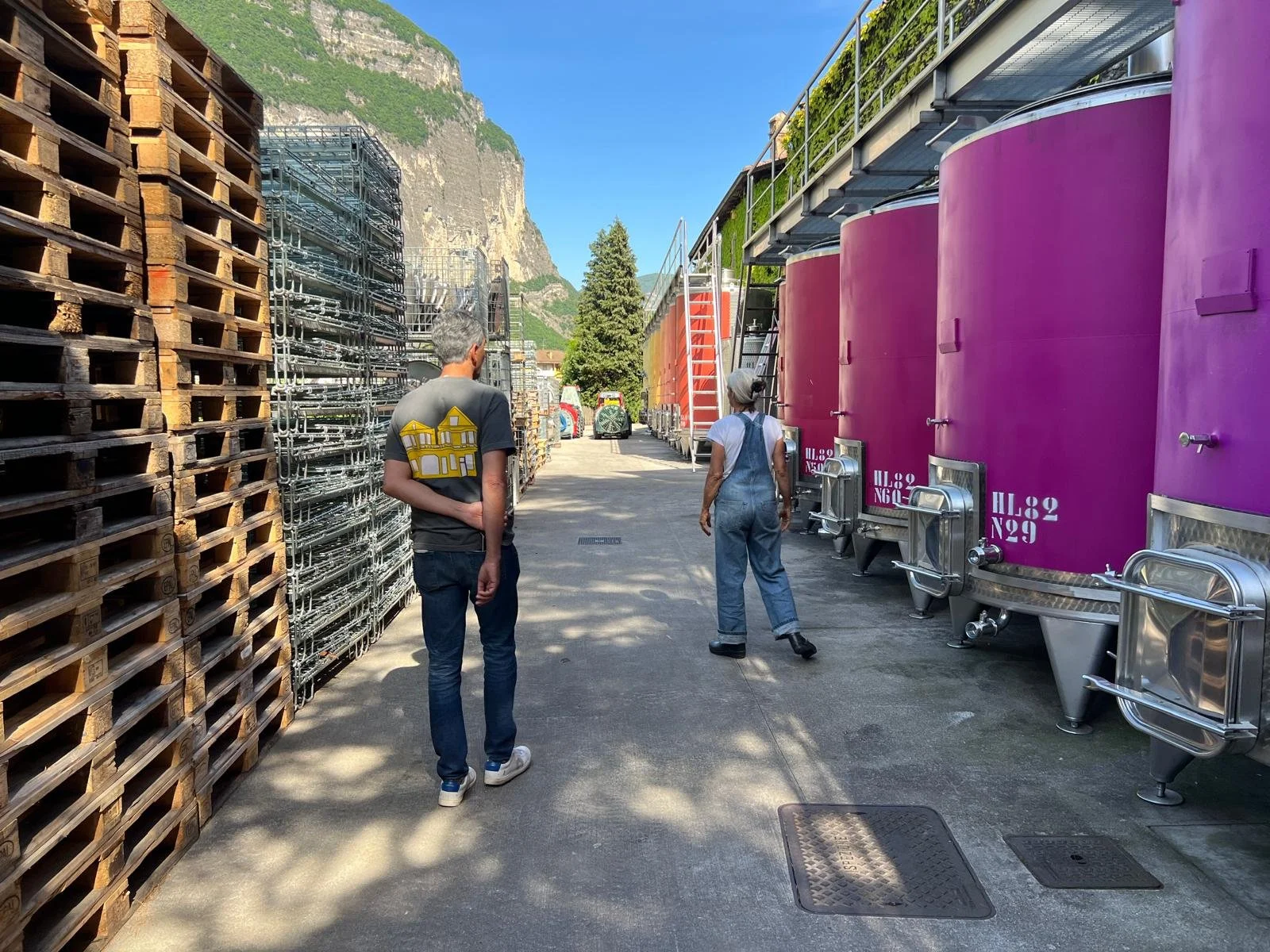
She welcomed my wife and me at her estate and was generous with her time. An early adopter of biodynamic farming, her vineyards have been Demeter certified since 2009.
The winemaking is low intervention — one of the principles of natural winemaking. However, Myrtha, Elisabetta's daughter, was once asked in an interview what 'cool' trend she did not care for in natural winemaking. Her answer: 'lack of precision.' I had to ask Elisabetta about this — precision feels like a dimension of natural winemaking that is less discussed.
"How do you bring more precision when you're intervening less?"
"You trust your grapes."
Of course, to trust your grapes, you must know them from experience, intimately, from their very beginning in the vineyard, all the way to the bottle.
How well does Elisabetta know her grapes? Foradori rescued a native variety called Teroldego from near-extinction and brought it to the recognition it deserves — an authentic expression of terroir, now grown by winemakers across the region. Dark fruit, savory, a touch of spice.
All the Foradori wines — reds and whites — are delicious. We love them. They taste like the beautiful vineyards and the vibrant ecosystem you see in the pictures. Please feel free to ask us about Elisabetta's wines next time you're dining with us.
Giuseppe Quintarelli & the Veneto
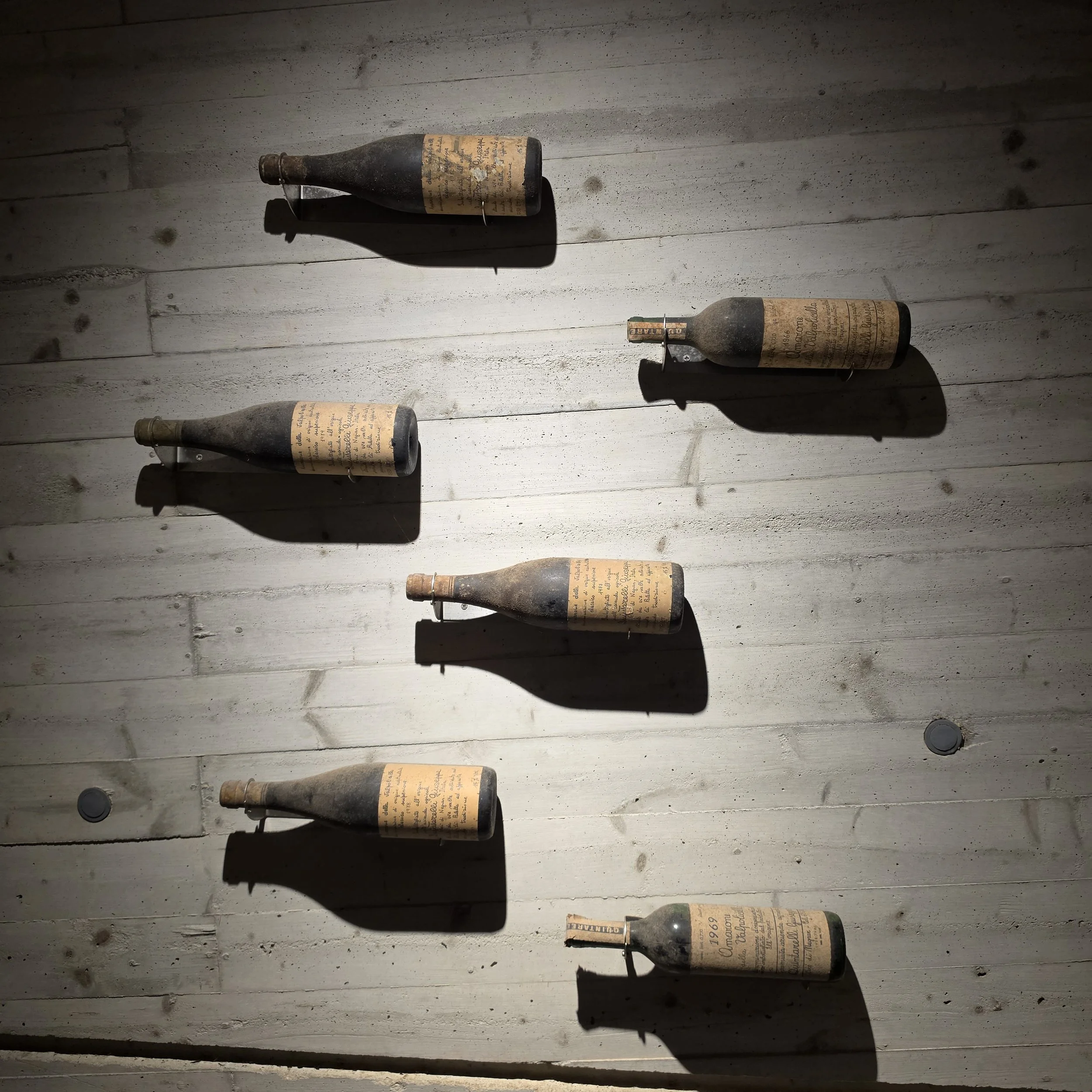
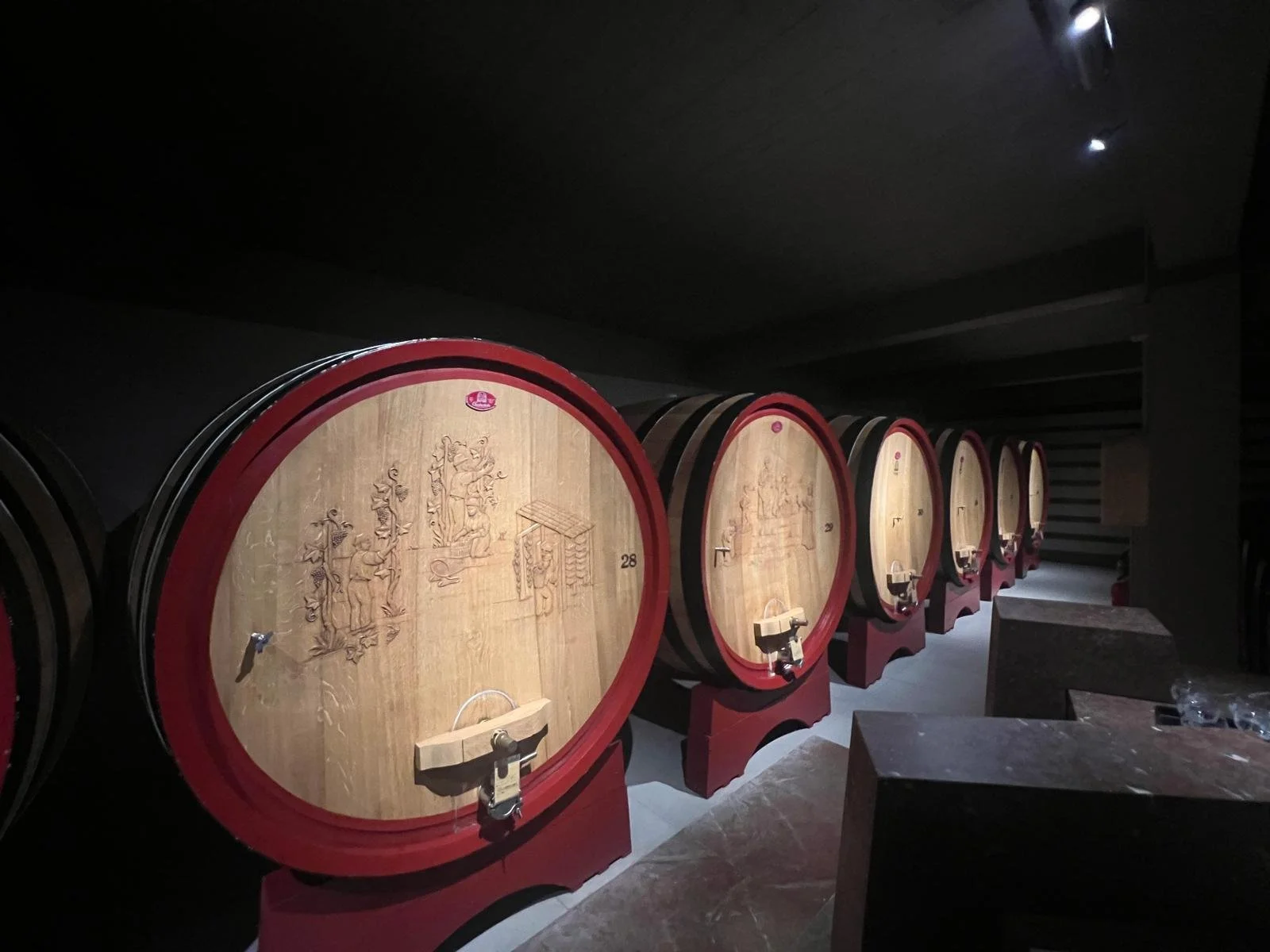
From Trentino, we drove south into the Veneto, arriving near Verona in Valpolicella Classico territory, where the legendary Quintarelli winery resides. Do not expect signs to get you there, or a name on the building to let you know you're in the right spot. Instead, just let the small roads along the vineyards take you there — (no, please, absolutely use Google Maps).
Valpolicella, a broad appellation focused on red wine production, is located on the eastern side of Lake Garda and north of Verona. While many great wines are made here, Amarone is easily the most famous.
Giuseppe Quintarelli, known as “The Father of Amarone,” started making wine in 1950, taking over for his dad when the region had little recognition for great wine. His commitment to quality helped change that. Our visit was led by Francesco, one of Giuseppe's grandsons. Quality, tradition, and legacy were among the values he emphasized — ensuring the continuity of what Giuseppe Quintarelli built.
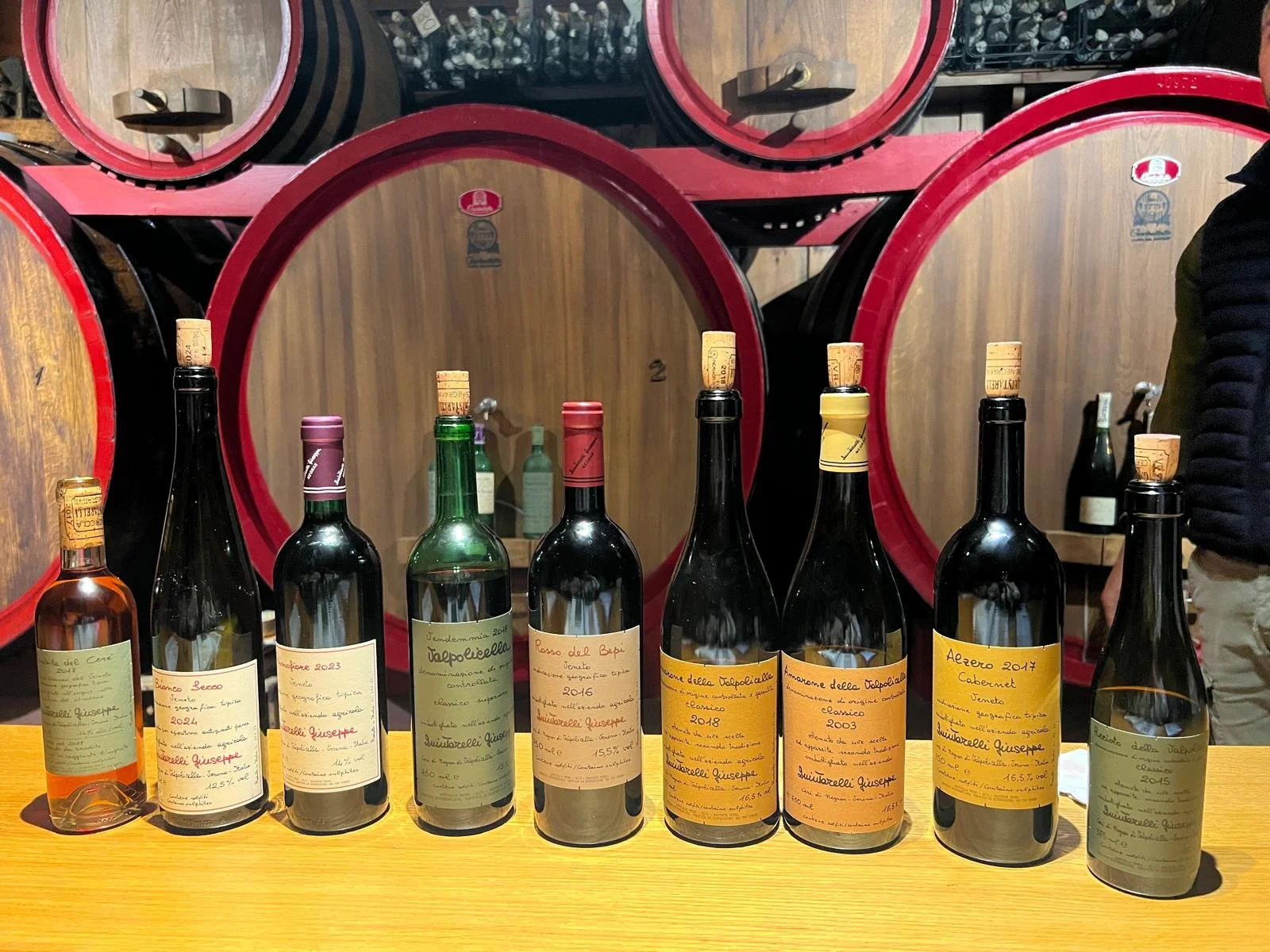
Something fun: if you know these wines, you will recognize the labels with their distinctive handwritten style. Francesco revealed that there was a time when they were actually handwritten — a family friend taking on that responsibility over the years. The family preserved the various writing styles characteristic of each wine so that labels could be printed while keeping the same design. Such care for tradition and legacy.
The tasting illustrated the beautiful range of wines made at Quintarelli and included a comparison between a 2018 and 2003 Amarone. Amarone is made exclusively with the best grapes of the best years, air dried from about September to January in a process known as "appassimento." Grapes slowly lose their water, sugars concentrate, and flavors evolve — then the winemaking can start. That high sugar concentration explains the high alcohol: yeasts must consume more sugar during fermentation, producing more alcohol as a byproduct.
Quintarelli releases their Amarone after 7+ years of maturation. Both wines showed depth and complexity, the 2003 revealing tertiary flavors of spice, licorice, and balsamic. I wanted to take the bottle away from our host! Yet it was the 2017 Alzero, their Cabernet blend, that I came back to when offered a second pour — the favorite wine of Giuseppe's wife.
Quintarelli wines are not inexpensive — they are exceptional. We proudly list them under our 'Reasonably Serious Reds' on our wine list.
Wine tourism is of course meant to be exceptionally fun. When meeting winemakers of the caliber of Foradori and Quintarelli, it will also make you reflect on how much hard work and passion goes into a high craft bottle of wine. It certainly did for me.